
Nucleus Fund Announces Investment in Terraphene to Scale Hemp-Based Materials Manufacturing in Utah
Partnership will help build a new materials economy in Utah, creating rural manufacturing jobs while supporting water conservation efforts tied to the Great Salt Lake
Today the Nucleus Institute announced an investment from the Nucleus Fund, a state-back early-stage venture fund, in Utah-based Terraphene, a material technology company developing hemp-based alternatives to plastic, wood, metal, and concrete. The investment will support Terraphene's plans to scale its manufacturing and processing footprint across Utah.
Terraphene supplies a proprietary core material to manufacturers, who use it to produce and distribute finished products. The company's first commercial application is a multi-year pallet supply contract with two of the largest pallet manufacturers in the United States.
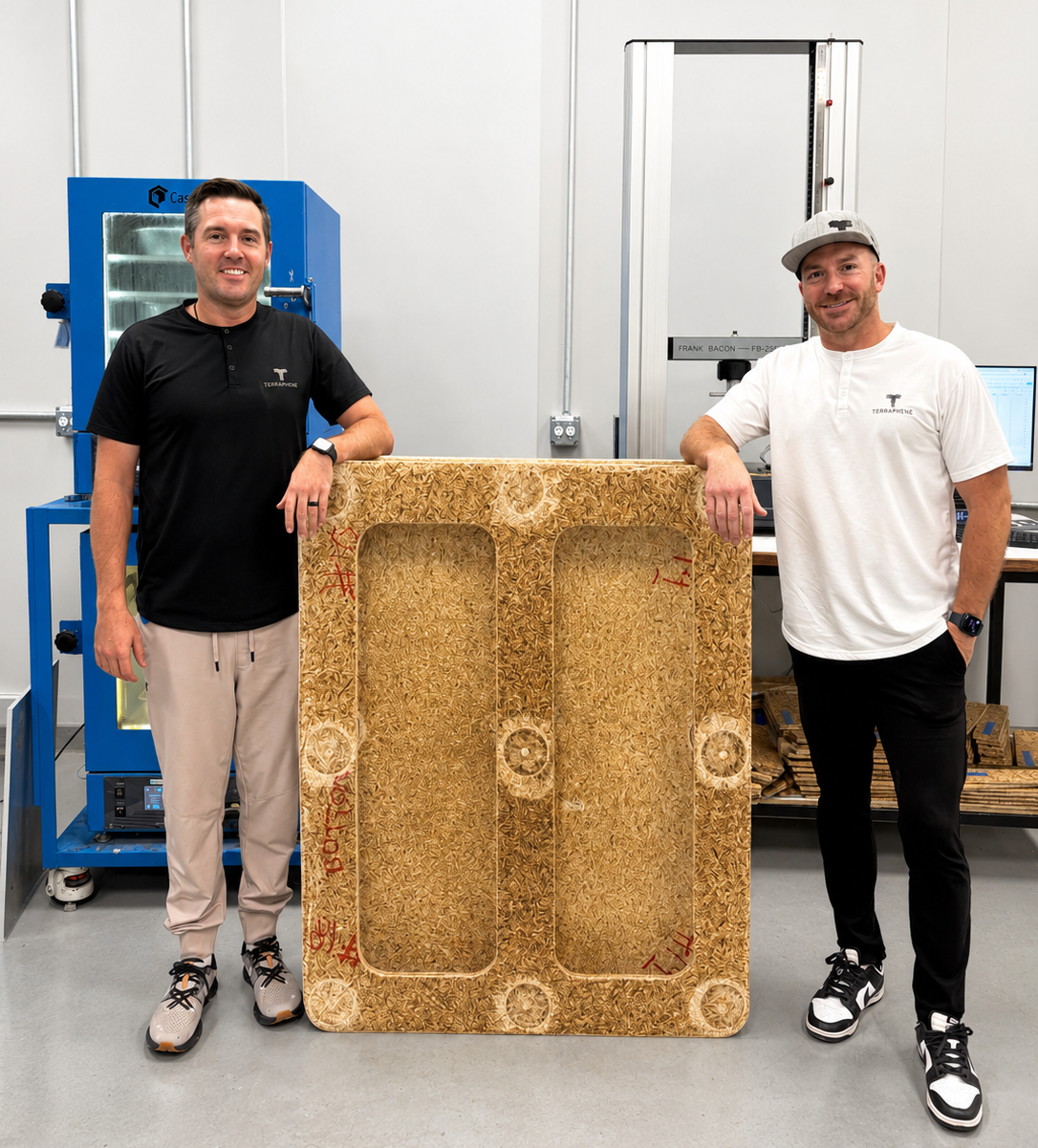
From left to right, brothers Jarrett and Daniel Webster stand alongside a prototype pallet made from Terraphene’s proprietary hemp-based construction material at the company’s facility.
A Utah Story
Terraphene was founded by two Utah-rooted brothers with nearly a decade of experience navigating the hemp industry. That combination of local commitment and industry experience is central to why the company chose to build in Utah rather than elsewhere.
"Terraphene is choosing Utah because this is our home, and it offers us the opportunity to maximize our impact on both the economy and the environment," said Daniel Webster, Founder and CEO of Terraphene. "This partnership with Nucleus gives Terraphene the capital and the network to scale our manufacturing footprint here in Utah."
"Terraphene is committed to creating high-value manufacturing jobs in Utah, most of which will be in Utah's rural communities," Webster added. "Our goal is to make Utah the epicenter of a new materials economy that solves real problems for farmers, manufacturers, and the Great Salt Lake."

Raw hemp fiber used by Terraphene as the foundational material in its proprietary manufacturing process.
Backing a New Utah Industry
The Nucleus Fund’s investment reflects its mandate to back deep-tech ventures that can create new industries and high-value jobs in Utah. The Nucleus team sees particular promise in Terraphene’s potential to grow rural manufacturing while giving farmers a viable, lower water alternative to traditional crops, an opportunity Nucleus views as directly relevant to the long-term health of the Great Salt Lake.
"This is exactly the kind of investment the Nucleus Fund was built to make," said Angela Smith, COO of Nucleus and Managing Director of the Nucleus Fund. "Terraphene's materials platform has the potential to create a new manufacturing ecosystem in Utah, and we are proud to support the company as it scales its technology and creates jobs across the state."
"What excites us about Terraphene is how many parts of Utah's economy they touch at once,” said Kristin Wihera, Director of Fund Operations at the Nucleus Fund. “It's rural manufacturing jobs, it's a new source of stable income for farmers, and it's a real opportunity to reduce the water use that's putting pressure on the Great Salt Lake."
As part of the investment, Terraphene will draw on Nucleus's network to connect with manufacturers, researchers, and downstream partners across Utah, with the goal of building a durable manufacturing base capable of serving national and global markets. Nucleus also sees strong potential for Terraphene to generate meaningful financial returns, helping sustain the Nucleus Fund's evergreen model so it can continue backing the next generation of Utah-grown deep-tech ventures
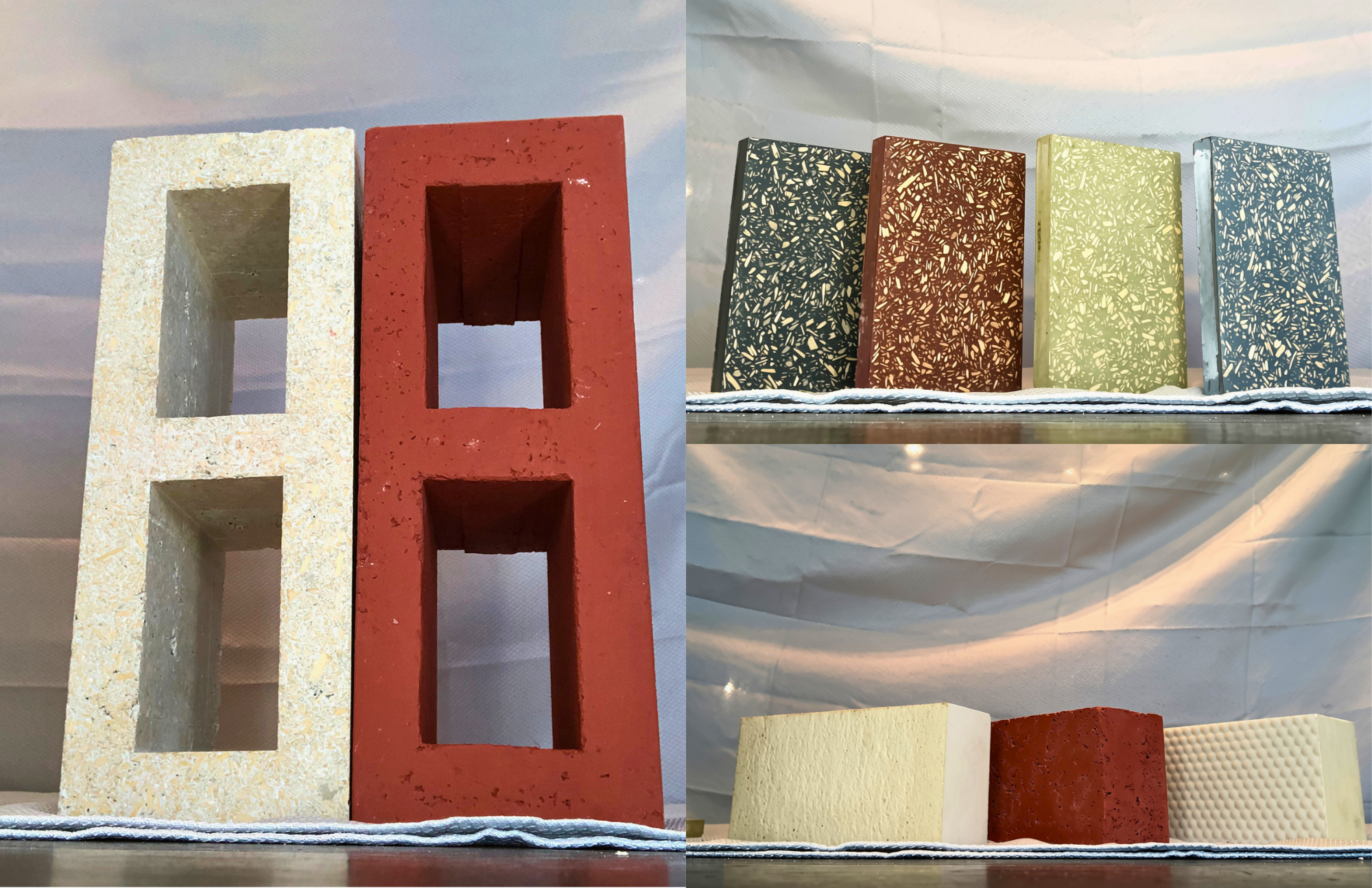
A selection of Terraphene prototypes showcases the versatility of the company’s proprietary hemp-based material across a range of building applications, forms, colors and surface finishes.
Addressing Two of Utah's Biggest Challenges
Utah faces two significant, related economic headwinds: housing affordability and water sustainability tied to the Great Salt Lake. Terraphene's technology platform, designed to meet or exceed the performance of traditional materials on strength, durability, and cost stability, is positioned to help address both.
By enabling local production of building materials, Terraphene aims to reduce reliance on imported lumber and concrete, inputs whose cost and availability place upward pressure on construction. At the same time, Terraphene's model gives farmers the option of multi-year contracts with predictable pricing, offering a more stable financial alternative to higher water-demand crops.
That shift in crop selection is where the company's potential impact on the Great Salt Lake watershed comes into focus. Converting acreage from thirstier crops to hemp can significantly reduce agricultural water use upstream, water that would otherwise be diverted before reaching the lake, while maintaining or improving farmer profitability. Terraphene's supply agreements are designed to make that conversion economically attractive to farmers, not just environmentally desirable, so that water savings are built into the business model rather than dependent on incentives alone.
Terraphene's approach also creates supply chain resilience by domesticating feedstock production and reducing reliance on imported materials, an added benefit as the company scales its rural manufacturing base.
Download press release here.